Fulfillment Through God: Lessons from Haggai 1:6

Have you ever felt like running on a treadmill—expending energy but getting nowhere? Many find ourselves exhausted yet unfulfilled in our relentless quest for success and satisfaction. We work harder, accumulate more, and strive for better, only to feel a lingering sense of emptiness. This feeling isn't new; it's a timeless human experience. The prophet Haggai addressed a similar situation over 2,500 years ago. In Haggai 1:6, we discover a powerful message that speaks directly to our modern struggles and invites us to reevaluate where we place our priorities.
Understanding the Context of Haggai 1:6
To fully appreciate the message of Haggai 1:6, it's essential to immerse ourselves in the historical and cultural setting of the time. Around 520 B.C., the Israelites had recently returned to Jerusalem after 70 years of exile in Babylon. King Cyrus of Persia had issued a decree allowing them to return and rebuild the temple of the Lord (Ezra 1:1-4). This was a significant moment—a chance to restore their relationship with God and reestablish their community.
However, upon returning, the people faced opposition and became discouraged (Ezra 4:4-5). Instead of persevering in rebuilding the temple, they shifted their focus to their own homes and personal affairs. They built comfortable houses for themselves while the temple remained in ruins (Haggai 1:4). This neglect wasn't just about a building; it symbolized a more profound spiritual apathy and misplaced priorities.
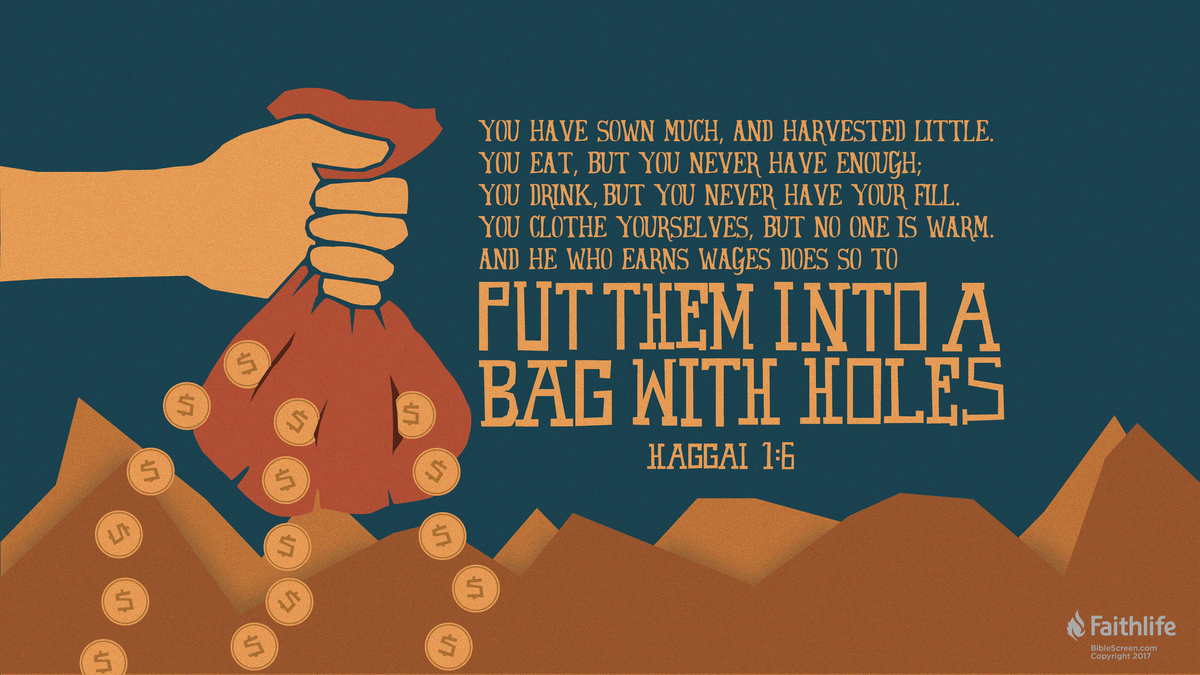
In this context, Haggai delivers a poignant message from the Lord. The people are experiencing frustration in their labor—they sow much but harvest little; they eat and drink but aren't satisfied; they earn wages only to put them in a "bag with holes" (Haggai 1:6). God is highlighting the futility of their efforts without His blessing. Their hardships are not random but are directly linked to their neglect of God's house.
By urging them to "consider your ways" (Haggai 1:5, 7), God calls the Israelites to reflect on their actions and the state of their hearts. The lack of prosperity is a divine signal prompting them to realign their priorities. The temple represented God's presence among His people, and its rebuilding was essential for restoring their covenant relationship with Him.
Understanding this backdrop helps us see that Haggai 1:6 isn't merely about agricultural failure or economic hardship. It's a spiritual wake-up call. For the original audience, it was a clear message that their well-being was interconnected with their obedience to God and commitment to His purposes.
What Haggai 1:6 Reveals About God
Haggai 1:6 presents dissatisfaction and unfulfilled labor: "You have sown much, and harvested little. You eat, but you never have enough; you drink, but you never have your fill. You clothe yourselves, but no one is warm. And he who earns wages does so to put them into a bag with holes." This verse doesn't just highlight the struggles of the Israelites; it reveals profound truths about God's character and His relationship with His people.
Firstly, this passage emphasizes God's sovereignty over all aspects of life. The Israelites' hardships were not random misfortunes but were orchestrated by God to capture their attention. God was actively communicating with them by controlling the productivity of their labor and the satisfaction derived from their necessities. He is not a distant deity but one who is intimately involved in the daily lives of His people. This demonstrates that God holds authority over the natural world and human circumstances, using them to fulfill His purposes (Psalm 135:6).
Secondly, the verse reveals God's desire for His people to prioritize Him above all else. The Israelites had neglected to rebuild the temple, focusing instead on their homes and comfort (Haggai 1:4). Their misplaced priorities led to spiritual apathy. God's response was to withhold the fullness of blessings they sought through their own efforts. This action illustrates that God values our devotion and obedience more than our outward success. He seeks a relationship with us where He is central, reminding us that true fulfillment comes from Him alone (Matthew 6:33).
Furthermore, Haggai 1:6 highlights God's loving discipline. The frustrations experienced by the Israelites served as a form of correction intended to steer them back to the right relationship with Him. Hebrews 12:6 says, "For the Lord disciplines the one he loves, and chastises every son whom he receives." God's discipline is not punitive but redemptive. He allows challenges to arise when we stray, not out of wrath but out of a desire to restore us to the joy of communion with Him.
Lastly, the passage emphasizes God's faithfulness to His covenant promises. Despite the people's disobedience, God did not abandon them. Instead, He sent the prophet Haggai to deliver His message, urging them to "consider your ways" (Haggai 1:5, 7). God's initiative in reaching out demonstrates His steadfast love and commitment. He remains faithful even when we are faithless (2 Timothy 2:13), continually inviting us back into fellowship with Him.
In essence, Haggai 1:6 reveals a sovereign, relational, corrective, and faithful God. He is deeply invested in our lives, desires our wholehearted devotion, lovingly corrects us when we go astray and remains unwavering in His promises. For us today, this serves as a potent reminder to examine our priorities and seek fulfillment not in worldly pursuits but in a restored and vibrant relationship with God.
Applying Haggai 1:6 to Our Lives Today
Haggai 1:6 is a timeless mirror reflecting the human tendency to prioritize personal ambitions over spiritual commitments. Pursuing success, comfort, and security is easy in our fast-paced, modern world. We toil relentlessly—working extra hours, striving for promotions, seeking the latest conveniences—yet often feel unfulfilled and restless. Just as the Israelites sowed much but harvested little, we may accumulate wealth and possessions but still experience a profound emptiness.
This verse challenges us to examine where we place our priorities. Are we investing our time, resources, and energy into building our own "houses" while neglecting the "house of the Lord"? In a contemporary context, this doesn't necessarily refer to a physical building but to our relationship with God and participation in His mission. Jesus reminds us in Matthew 6:33 to "seek first the kingdom of God and his righteousness, and all these things will be added to you." When prioritizing God's kingdom, we align ourselves with His purposes, leading to true contentment and blessing.
Moreover, Haggai 1:6 prompts us to consider the futility of seeking satisfaction apart from God. The imagery of earning wages only to put them in a bag with holes vividly depicts the frustration of unmet expectations when God is not at the center of our lives. Augustine of Hippo once said, "You have made us for Yourself, O Lord, and our hearts are restless until they rest in You." Our deepest needs—purpose, identity, fulfillment—are ultimately met in a vibrant relationship with God.
For Christians today, this passage is an invitation to reassess our commitments. It encourages us to:
- Reflect on Our Priorities: Are we giving God the first fruits of our time, talents, and treasures, or are we offering Him leftovers?
- Invest in Spiritual Growth: Just as the Israelites were called to rebuild the temple, we are called to nurture our spiritual lives through prayer, Scripture reading, and fellowship.
- Engage in God's Work: Participate actively in your local church and community, using your gifts to serve others and advance the gospel.
- Trust in God's Provision: Recognize that true satisfaction comes not from our efforts alone but from God's blessing upon our obedience.
By heeding Haggai 1:6, we position ourselves to experience the fullness of life God intends for us. It's a call to shift our focus from self-centered pursuits to God-centered living, knowing that in Him, our labor is not in vain (1 Corinthians 15:58).
Haggai 1:6 is more than an ancient admonition; it's a call for us today. It urges us to step back from the ceaseless hustle and examine the foundation upon which we're building our lives. Are we chasing after fleeting pleasures and personal ambitions, or are we investing in what truly matters—the eternal kingdom of God? The dissatisfaction we often feel is not a void that more work, money, or accolades can fill. It's a spiritual hunger that only a restored relationship with God can satisfy.
As we reflect on this passage, let's heed the prophet's call to "consider our ways." By realigning our priorities with God's purposes, we open ourselves to the fullness of life that He promises. In doing so, we move from a cycle of endless striving to a place of profound fulfillment and peace. Let's commit to putting God first, trusting He will provide all we need as we seek His kingdom above all else.