Understanding Revelation: Beyond the Millennial Debate

The Thousand-Year Footnote Hijack (and Why It Drives Me Nuts)
Let’s be honest: a thousand-year footnote has hijacked our conversations about Revelation. Ask, “What’s your eschatology?” and too often you’ll get a label, pre-mil this, post-mil that, as if John wrote a decoder ring for timelines instead of a discipleship manual for suffering saints.
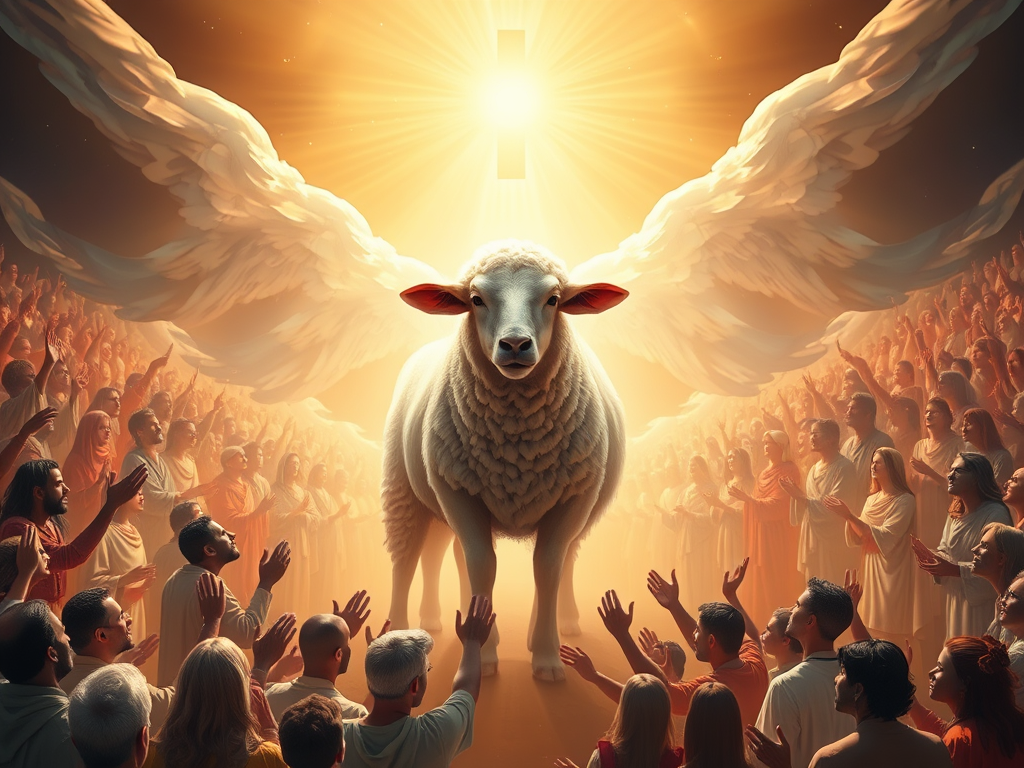
Revelation opens as prophecy sent to real churches, promising blessings to those who hear and keep it, not to those who solve it like a riddle (Rev. 1:1–3). Meanwhile, the book’s center of gravity is not our charts; it’s the Lamb. From the throne room hymns to the New Jerusalem, the slain-and-risen Christ stands at the blazing center, and the church is called to conquer by faithful witness in His victory (Rev. 5; 12:11).
And about that millennium? It appears in one chapter (Rev. 20). One. However important your view may be, it cannot bear the weight of the entire book. Let’s stop letting a narrow debate shrink what Revelation really is: a cathedral of hope (my own term for the way this book lifts our eyes into a vast, worship-filled vision of the Lamb’s triumph). Put the timeline down for a moment, pick up the hymnbook, and let John disciple us into courageous, doxological perseverance under the Lamb who reigns now and will soon make all things new.
With that said, here are five themes (deeply biblical and classically Reformed) that deserve our attention.
Living in the “Already/Not Yet” Kingdom
One of the great themes woven throughout Revelation is the reality that the kingdom of God is both present and future: already inaugurated in Christ and not yet consummated until His return. We hear this tension in Revelation 1, where Jesus is described as the faithful witness, the firstborn from the dead, and the ruler of the kings on earth. He has already made us a kingdom and priests (1:5–6). At the same time, Revelation points forward to the day when the whole world will confess His reign, when the seventh trumpet announces, “The kingdom of the world has become the kingdom of our Lord and of his Christ, and he shall reign forever and ever” (11:15).
This tension is not abstract. It explains why Christians can experience the reality of Christ’s reign in their hearts and churches even while still groaning with creation for redemption. We live in the overlap of the ages: Christ’s victory is secure, but the fullness of His reign awaits the new creation, when the curse is lifted and God’s dwelling is with man (21:3–5; 22:3–5).
The Beatific Vision: “We Shall See His Face”
Revelation also provides a glimpse into what Christians have referred to as the beatific vision, the ultimate, blessed sight of God in Christ. John begins the book with a vision of the glorified Son of Man, radiant in majesty, whose face shines like the sun (1:12–18). That vision leaves him undone, yet comforted. By the book’s close, the promise is made not only to John but to all believers: “They will see his face” (22:4). This is the consummation of the priestly blessing, the longing of Moses, the hope of every saint: to behold the face of God without veil, without fear, and without end.
When 1 John 3:2 promises that “we shall be like him, because we shall see him as he is,” Revelation supplies the imagery: God’s people dwelling in His presence, illuminated by the Lamb Himself (21:22–23). This is not a promise of abstract bliss but of personal, transforming communion. The Lamb is our lamp, and His glory fills the city.
Seeing Christ, and Becoming Like Him
But the sight of Christ is never just a spectacle; it is transforming. Revelation shows us what 1 John 3:2 looks like in practice. Those who see His face also bear His name on their foreheads (22:4), their very identity reshaped by His presence. The 144,000 are described as those who follow the Lamb wherever He goes, their lives marked by truth and blamelessness (14:4–5). The great multitude in white robes are purified, not by their own strength, but because their garments are washed in the blood of the Lamb (7:9, 14). The Bride makes herself ready, clothed in fine linen, which John tells us represents the righteous deeds of the saints (19:7–8).
Over and over, the book shows us that beholding the Lamb produces likeness to the Lamb. To see Him is to be marked by Him, to follow Him, to be purified by Him, and finally, to reign with Him (2:17, 26–28; 3:21). In other words, Revelation gives us a picture of glorification, not as some ethereal idea, but as the natural outcome of seeing Jesus Christ unveiled. What John says in his letter, “we shall be like Him because we shall see Him,” is written in vivid pictures across Revelation’s pages.
The End of Suffering: Every Tear Wiped Away
Few promises in Scripture land with as much tenderness as Revelation’s vision of the end of suffering. The saints are told that they will hunger no more, thirst no more, and that the Lamb Himself will be their shepherd, guiding them to springs of living water (7:16–17). God Himself will wipe away every tear from their eyes. By chapter 21, this hope crescendos as John hears the voice from the throne declare, “Behold, the dwelling place of God is with man… He will wipe away every tear from their eyes, and death shall be no more” (21:3–4).
Notice how comprehensive the promise is: not only will sorrow and pain be gone, but death itself will be destroyed. In chapter 20, death is cast into the lake of fire; it is the end of endings. In chapter 22, the tree of life reappears, bearing fruit for the healing of the nations, a sign that the brokenness of Eden is forever undone. Revelation doesn’t minimize suffering; it acknowledges it fully, but it refuses to let suffering have the last word.
The Writing of All Wrongs: Holy Justice and Great Comfort
Finally, Revelation assures us that God’s justice will prevail. The martyrs cry out from beneath the altar, “How long, O Lord?” (6:10), and their cry is not ignored. Their vindication is promised and finally delivered. The fall of Babylon (chapters 17–18) demonstrates that God will bring down systems of oppression, greed, and idolatry, and heaven itself rejoices because His judgments are “true and just” (19:2).
At the climax of judgment, John sees the Rider on the white horse, called Faithful and True, who judges and makes war in righteousness (19:11–16). He then describes the great white throne, where all the dead stand before God and the books are opened, and each is judged according to what he had done (20:11–15). Finally, the gates of the New Jerusalem are shut against all that is unclean (21:27). Evil is not only punished but banished, never to defile again.
For the believer, this is not a terror but a comfort. The Judge is the Lamb who was slain for us. The Heidelberg Catechism famously asks, “How does Christ’s return to judge the living and the dead comfort you?” The answer is that He is the one who has already removed all my curse, so I look forward to that day “with uplifted head.” Revelation takes that confession and paints it in unforgettable images.
Why This Matters for Monday
Here’s the contrast worth noting: the thousand years in Revelation 20, whatever your interpretation, takes up just a handful of verses. These five themes, however, resonate throughout the entire book and span the entire canon of Scripture. The millennium is a moment in the story; Christ and His victory are the story's central focus. If we spend more energy mapping the timeline of a single chapter than marveling at the Lamb who reigns from start to finish, we’ve missed the point.
Revelation is not a code to crack; it’s a pastor’s book to steady saints. The already/not yet, the beatific vision, our transformation by sight, the end of suffering, and the righting of all wrongs are bright threads that run through Scripture and our classic confessions. Fix your eyes here and you’ll find courage for ordinary faithfulness until the day the King declares, “Behold, I am making all things new” (Rev. 21:)5)