VOTD - 1 Corinthians 12:12-13

The first epistle to the Corinthians is a letter from Paul the Apostle to the church in Corinth. This Greek city was known for its diverse cultural and religious influences. In this letter, Paul addresses various issues affecting the church's spiritual health, such as divisions, immorality, and false teachings. In chapter 12, Paul addresses the topic of spiritual gifts and how they are distributed among believers in the church.
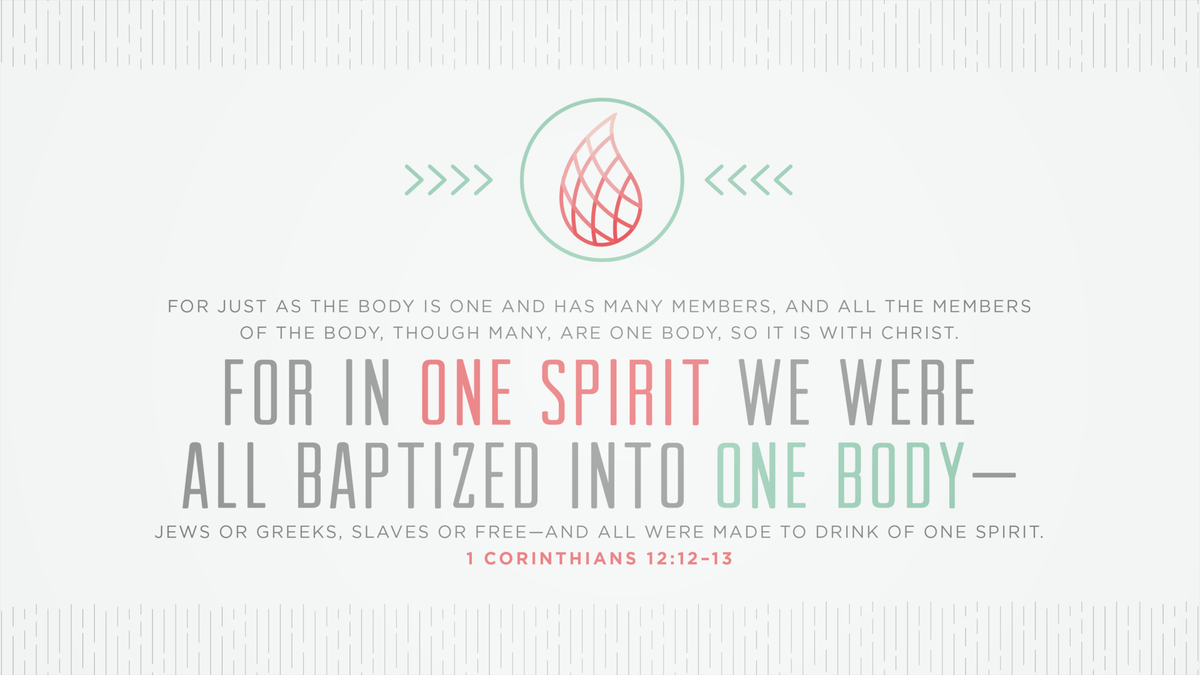
In 1 Corinthians 12:12-13, Paul uses the analogy of a body to describe the church's unity in diversity. He writes, "For just as the body is one and has many members, and all the members of the body, though many, are one body, so it is with Christ. For in one Spirit we were all baptized into one body—Jews or Greeks, slaves or free—and all were made to drink of one Spirit."
Paul's analogy of the body is based on the idea that just as the human body comprises many parts with different functions, the church consists of many members with other spiritual gifts and operations. However, despite their differences, they are all part of the same body, and their diversity is necessary for the body's proper functioning.
Paul emphasizes that the church's unity is not based on external factors such as race, social status, or cultural background. Instead, it is based on the fact that all believers have been baptized into the body of Christ by the Holy Spirit. Therefore, regardless of their differences, all believers have the exact source of spiritual life and are united in Christ.
Specifically, in this passage, Paul emphasizes the importance of unity in the church. He uses the analogy of the body to illustrate how each church member is essential and has a unique role in the church's overall functioning. Just as each part of the body has a different function, so each member of the church has a different spiritual gift and role to play.
Paul also emphasizes that the church's unity is based on all believers being baptized into the body of Christ by the Holy Spirit. This baptism is not a physical baptism but a spiritual one that occurs when a person accepts Christ as their Savior. Through this spiritual baptism, believers unite with Christ and one another, regardless of their background or social status.
There are four practical applications of this passage:
- Appreciate the diversity of spiritual gifts in the church. Just as each part of the body has a different function, so each member of the church has a different spiritual gift. Instead of feeling inferior or jealous of others' gifts, we should appreciate the diversity of gifts and work together to use them for the benefit of the church.
- Recognize that all believers are part of the same body. Regardless of our differences, we are all part of the same body of Christ. Therefore, we should avoid creating divisions based on external factors such as race or social status.
- Work together for the good of the church. Just as each part of the body works together for the good of the whole body, so each member of the church should work together for the good of the church. Instead of working for our own interests, we should seek to use our gifts for the benefit of the whole church.
- Be open to the Holy Spirit's leading. The Holy Spirit is the one who baptizes us into the body of Christ and gives us spiritual gifts. Therefore, we should be open to the Holy Spirit's leading and allow Him to guide us in using our gifts to benefit the church.
In 1 Corinthians 12:12-13, Paul emphasizes the importance of unity in the church and the diversity of spiritual gifts. Through the analogy of the body, Paul shows how each church member is essential for its proper functioning and how the church's unity is based on the fact that all believers have been baptized into the body of Christ by the Holy Spirit. As believers, we should appreciate the diversity of gifts in the church, recognize that we are all part of the same body, work together for the church's good, and be open to the Holy Spirit's leadership. By doing so, we can fulfill our role in the body of Christ and contribute to the growth and health of the church.